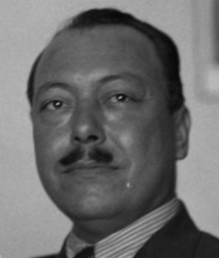
Hussein Fakhri al-Khalidi
حسين فخري الخالدي
Born: Jerusalem, Ottoman Palestine
Domain: Politics & Diplomacy
Recognition: Regionally recognized
Biography
Hussein Fakhri al-Khalidi was born on 17 January 1895 in Jerusalem into one of the city's oldest and most distinguished notable families, the Khalidis, whose scholarly lineage and celebrated library had anchored Jerusalem's intellectual life for centuries. Trained as a physician at the American University of Beirut, he served as a medical officer in the Ottoman army during the First World War (1916-1918), where he was wounded three times. This blend of professional medicine and inherited civic standing positioned him to become one of the leading Palestinian public figures of the British Mandate era. Al-Khalidi entered municipal politics and was appointed Mayor of Jerusalem in January 1935, after a contested election in which the rival Nashashibi faction's appeal was rejected; he governed the city alongside deputy mayors Daniel Auster and Yacoub Farradj. In June 1935 he founded the Reform Party (Hizb al-Islah), which became one of the constituent factions of the Palestinian national movement. As the 1936-1939 Arab Revolt erupted against British rule and Zionist immigration, he served as the Reform Party's representative to the Arab Higher Committee, the umbrella leadership body of Palestinian Arabs. His prominence made him a target of British repression. When the Mandate administration outlawed the Arab Higher Committee on 1 October 1937, al-Khalidi was arrested and deported, together with four other nationalist leaders, to the Seychelles in the Indian Ocean. He remained in exile until December 1938, when he was released to attend the London (St James's) Conference of February 1939. He returned to Palestine in November 1942 and, when the Arab Higher Committee was reconstituted in 1945, joined it and became its secretary in 1946, placing him at the center of Palestinian diplomacy on the eve of catastrophe. With the 1948 Nakba, al-Khalidi served briefly as a minister in the short-lived All-Palestine Government proclaimed in Gaza in September 1948, and published a collection of his memoirs that year while in Beirut. After the West Bank's union with Transjordan, he built a second career in the Hashemite Kingdom of Jordan: he was made custodian of the Haram al-Sharif in 1951, served twice as Minister of Foreign Affairs (1953-1954 and 1956), and was briefly the thirteenth Prime Minister of Jordan in April 1957 during the turbulent constitutional crisis that followed the dismissal of the Nabulsi government. He died in Amman on 6 February 1962. His extensive personal diaries, later published in English as Exiled from Jerusalem, stand among the most valuable first-hand records of Mandate-era Palestinian political life. He was the uncle of the historian Rashid Khalidi and the economist Raja Khalidi, continuing the family's enduring presence in Palestinian public and intellectual affairs.
Why This Person Matters
A physician-turned-statesman from one of Jerusalem's oldest families, al-Khalidi led the city as mayor, was exiled to the Seychelles for his nationalism, served as secretary of the Arab Higher Committee on the eve of the Nakba, and later rose to become Prime Minister of Jordan.
Historical Context
Al-Khalidi's career spans the full arc of modern Palestinian political tragedy: he came of age in late-Ottoman Jerusalem, served in the Ottoman army in the First World War, and entered public life under a British Mandate increasingly committed to the Balfour Declaration. As mayor and a leader of the Arab Higher Committee during the 1936-1939 Arab Revolt, he embodied the urban notable class that led Palestinian resistance to British policy and Zionist settlement, paying for it with exile to the Seychelles. His tenure as AHC secretary in 1946-1948 placed him at the helm of a fractured and outmatched national movement on the very threshold of the 1948 Nakba and the destruction of Arab Jerusalem's political order.
Historical Context
- — Born in Jerusalem, Ottoman Palestine
- — The Nakba – Palestinian catastrophe and mass displacement
- — Six-Day War and occupation of West Bank and Gaza
- — Passed away at age 67
Legacy & Influence
Al-Khalidi remains a key figure for understanding Mandate-era Palestinian leadership and its limits, and his published diaries, Exiled from Jerusalem, are an indispensable primary source studied by historians of the period. As a scion of the Khalidi family and uncle of the influential historian Rashid Khalidi, he forms a living link between the notable politics of Mandate Palestine and the scholarship that continues to shape global understanding of the Palestinian question today.
Topics & Themes
- Ottoman Era
- Jerusalem
References & Sources
- Hussein Khalidi — Wikipedia — https://en.wikipedia.org/wiki/Hussein_Khalidi
- Hussein al-Khalidi — Jerusalem Story — https://www.jerusalemstory.com/en/bio/hussein-al-khalidi
- Exiled from Jerusalem: The Diaries of Hussein Fakhri al-Khalidi — https://www.bloomsburycollections.com/book/exiled-from-jerusalem-the-diaries-of-hussein-fakhri-al-khalidi/hussein-fakhri-al-khalidi-a-short-biography