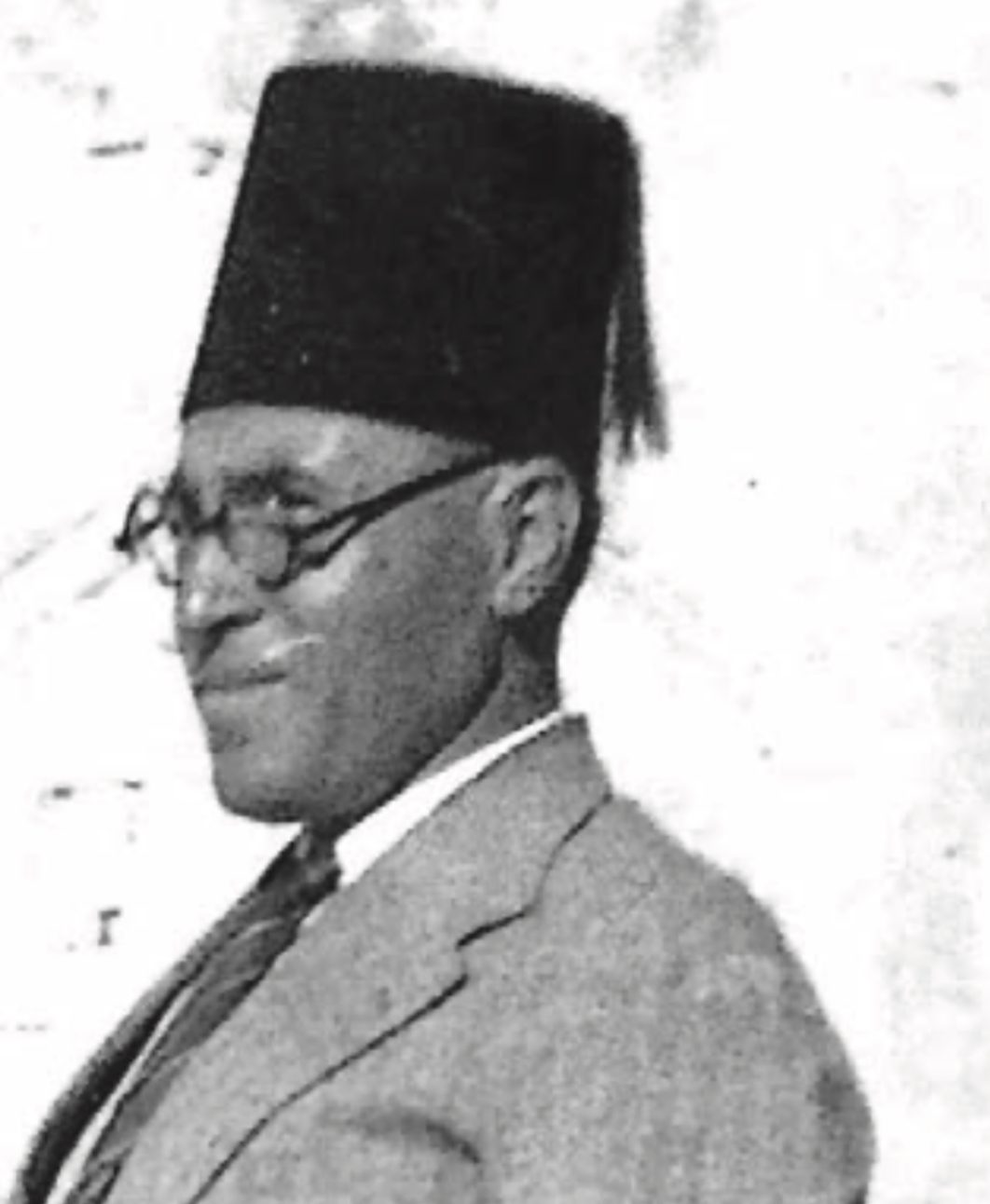
Stephan Hanna Stephan
ستيفان حنا ستيفان
Born: Beit Jala, Ottoman Palestine
Domain: Academia & Thought
Recognition: Regionally recognized
Biography
Stephan Hanna Stephan was born in 1894 in Beit Jala, near Bethlehem, during the late Ottoman period, into a Syriac Orthodox Christian family. He was educated at the Schneller School, the German Lutheran orphanage and vocational institute in Jerusalem, where he was confirmed in 1908. This upbringing made him a true polyglot: he was fluent in Arabic, English, German, Ottoman Turkish, and Syriac, a linguistic range that would define his entire scholarly and professional career. Stephan built his life inside the bureaucracy and intellectual world of Mandatory Palestine. He worked first in the Treasury and then in the Department of Antiquities, where he rose from Assistant Librarian to Archaeological Officer in 1945, translating Ottoman documents, inscriptions, and historical records. Alongside this official work he became one of the most active contributors to the Journal of the Palestine Oriental Society (JPOS), where he belonged to an informal circle of "nativist" ethnographers led by the physician Tawfiq Canaan, who sought to document Palestinian peasant folklore, customs, and folk religion before they were erased by colonialism and modernization. His scholarship matters because it treated the living culture of the Palestinian fellahin as a serious object of study and as a key to the ancient Near East. His 1922 article "Modern Palestinian Parallels to the Song of Songs" transcribed and analyzed Palestinian folk love-songs, comparing them to biblical, Mesopotamian, and Canaanite antecedents; the great biblical archaeologist William Foxwell Albright praised him as "a young man of promise." Stephan thus helped place Palestinian oral tradition within world scholarship while asserting the cultural depth and continuity of the native population. His output was strikingly varied and public-facing. He wrote travel guides such as This is Palestine (1942) and Palestine by Road and Rail (1942), the language primer Arabic Self-Taught, and an important multi-part English translation of the seventeenth-century Ottoman traveler Evliya Celebi's Seyahatname (Book of Travels), issued in six parts between 1935 and 1942. From 1936 he was also a broadcaster on the Arab Hour of the Palestine Broadcasting Service, carrying his ethnographic and historical knowledge directly to an Arabic-speaking radio audience. The Nakba of 1948 ended his world. Stephan, his wife, and their two sons were driven into exile and became refugees in Lebanon, where he died in 1949 at around fifty-four. His family later emigrated to Brazil. For decades he was largely forgotten, but recent scholarship has recovered him as a significant figure in the cultural and intellectual history of Mandate Palestine.
Why This Person Matters
A polyglot folklorist who documented the living culture of Palestine's peasantry and carried it onto the airwaves, only to die in exile after the Nakba.
Historical Context
Stephan's life spanned the rupture from late-Ottoman to British Mandate Palestine and ended in the catastrophe of 1948. As a Christian civil servant fluent in Ottoman Turkish, English, and German, he embodied the layered Palestinian society of the Mandate, working within colonial institutions like the Department of Antiquities and the Palestine Broadcasting Service while belonging to a native intellectual elite. His circle of "nativist" ethnographers around Tawfiq Canaan documented Palestinian peasant culture precisely as Zionist settlement and modernization were transforming the country, and his exile to Lebanon in 1948 made him one of the hundreds of thousands of Palestinians dispossessed by the Nakba.
Historical Context
- — Born in Beit Jala, Ottoman Palestine
- — The Nakba – Palestinian catastrophe and mass displacement
- — Six-Day War and occupation of West Bank and Gaza
- — Passed away at age 55
Legacy & Influence
Long overshadowed by his more famous colleague Tawfiq Canaan, Stephan has been recovered by twenty-first-century scholarship as a pivotal figure in the cultural history of Mandate Palestine. His ethnographic writings remain primary sources for the study of Palestinian folk songs, customs, and oral tradition, and his English translation of Evliya Celebi's account of Palestine endures as a scholarly reference. His career as a broadcaster, translator, and folklorist stands as evidence of a vibrant, self-documenting Palestinian intellectual culture that the Nakba scattered but did not erase.
Topics & Themes
- Ottoman Era
- West Bank
References & Sources
- Stephan Hanna Stephan — https://en.wikipedia.org/wiki/Stephan_Hanna_Stephan
- "A Young Man of Promise": Finding a Place for Stephan Hanna Stephan in the History of Mandate Palestine — https://www.palestine-studies.org/en/node/229472
- St. H. Stephan (1894-1949), (Stephan Hanna) - National Library — https://www.nli.org.il/en/a-topic/987007268293305171