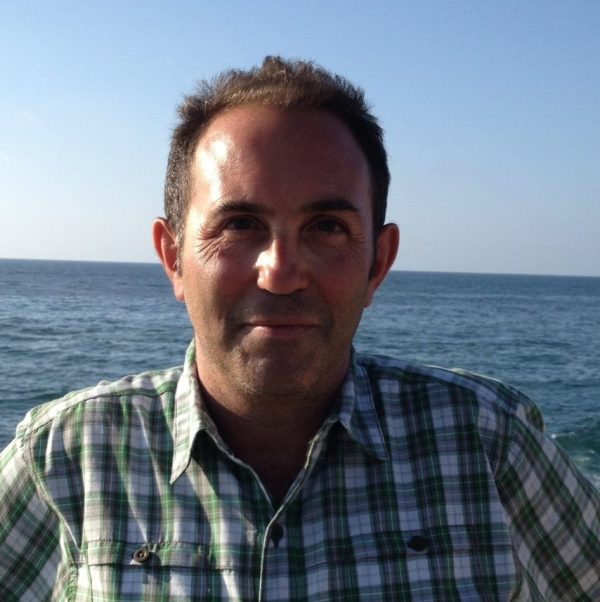
Saree Makdisi
سري المقدسي
Born: Washington, D.C. (Palestinian-Lebanese heritage; nephew of Edward Said), United States
Domain: Academia & Thought
Recognition: Globally recognized
Member of the Palestinian diaspora
Biography
Saree Makdisi is a literary scholar and public intellectual, Distinguished Professor of English and Comparative Literature at UCLA, known both for major scholarship on British Romanticism and for incisive writing on Palestine. He carries forward, in his own register, the engaged-criticism tradition associated with his uncle Edward Said. In Romantic studies he is a leading authority, author of acclaimed books on William Blake and on Romanticism and empire, including Romantic Imperialism and a prize-winning study of Blake's illuminated works. His command of eighteenth- and nineteenth-century British literature established his standing in the Anglophone academy. Makdisi is also among the most articulate scholarly commentators on Palestine and Israel. His book Palestine Inside Out offered a detailed account of the occupation's daily mechanics, and Tolerance Is a Wasteland analyzed the cultural and discursive frameworks that, he argues, naturalize dispossession. A frequent essayist in the Los Angeles Times, The Nation, and other outlets, he brings literary-critical method to political analysis, dissecting language, narrative, and ideology. His work models the public role of the humanities scholar that Said championed. Makdisi thus occupies a rare dual position, a respected Romanticist and a leading Palestinian voice in Western intellectual debate, influential among students of literature and of the conflict alike.
Why This Person Matters
He is both a leading scholar of British Romanticism and one of the sharpest Palestinian literary-critical voices on the occupation in the Western academy.
Historical Context
Born in 1964 in Washington, D.C., into a Palestinian-Lebanese family and a nephew of Edward Said, Saree Makdisi grew up within the intellectual milieu of the engaged-criticism tradition that his uncle defined. He came of scholarly age as that tradition matured in the American academy, and his career has unfolded across the post-Oslo decades, the Second Intifada, and the long deepening of the occupation, events that drew a literary scholar increasingly into writing on Palestine. His training in British Romanticism gave him the analytical tools, attention to language, narrative, and ideology, that he turned on the discourse surrounding Israel and Palestine. His dual vocation reflects an era in which humanities scholarship and political commitment were closely bound.
Historical Context
- — Born in Washington, D.C. (Palestinian-Lebanese heritage; nephew of Edward Said), United States
- — Six-Day War and occupation of West Bank and Gaza
Legacy & Influence
Makdisi occupies a rare dual standing as a leading scholar of British Romanticism, author of prize-winning studies of William Blake and 'Romantic Imperialism,' and one of the sharpest Palestinian literary-critical voices in the Western academy. His books 'Palestine Inside Out' and 'Tolerance Is a Wasteland' are widely read accounts of the occupation's mechanics and of the discursive frameworks that, he argues, naturalize dispossession. Through essays in the Los Angeles Times, The Nation, and beyond, he models the public role of the humanities scholar that Edward Said championed, carrying that legacy into a new generation. He is influential among students of literature and of the conflict alike, a living link between rigorous literary scholarship and engaged political analysis.
Topics & Themes
- Nakba Generation
- Diaspora
References & Sources
- Saree Makdisi — https://en.wikipedia.org/wiki/Saree_Makdisi
- Saree Makdisi, UCLA English — https://english.ucla.edu/people-faculty/makdisi-saree/