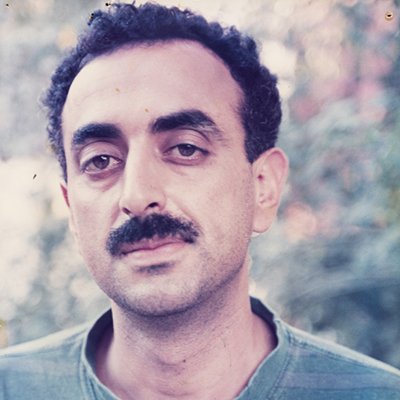
Said Murad
سعيد مراد
Born: Jerusalem, Jordanian-administered Jerusalem
Domain: Music
Recognition: Regionally recognized
Biography
Said Murad, an oud player, composer, and arranger from Jerusalem, is the founder and driving creative force of Sabreen, the East Jerusalem ensemble that became the most influential Palestinian band of the 1980s and one of the pioneers of modern committed Palestinian music. Establishing Sabreen in 1980, Murad set out to create a sophisticated contemporary sound rooted in Palestinian and Arab tradition yet open to jazz, blues, and experimental textures. Sabreen emerged at the height of the politically engaged "multazimeh" (committed) song movement that had swept the Arab world, drawing inspiration from Egypt's Sheikh Imam and Ahmed Fouad Negm and from Lebanon's Marcel Khalife and Ziad Rahbani. Under Murad's composition and arrangement, the band set the verse of leading Palestinian and Arab poets to richly textured music, producing landmark albums whose songs became part of the soundtrack of the First Intifada and the broader national struggle. What distinguished Murad's work was its refusal of cliché. Rather than simple anthems, his arrangements built layered, harmonically adventurous settings that treated resistance song as serious art, expanding the expressive range of Palestinian music and influencing a generation of musicians who followed. The collaboration with vocalist Kamilya Jubran, in particular, yielded some of the most admired Palestinian recordings of the era. Beyond performance, Murad transformed Sabreen into an institution. He developed it into a production house and record label, the Sabreen Association for Artistic Development, nurturing young Palestinian talent and providing infrastructure for independent music-making in a context where such resources were scarce. This institution-building extended his influence well beyond his own compositions. Through decades of work as composer, bandleader, and cultural organizer, Said Murad helped define what modern Palestinian art-pop could be. He remains a central figure in the lineage that runs from the committed song of the 1980s to the diverse independent Palestinian music scene of the twenty-first century.
Why This Person Matters
As founder and composer of Sabreen, he pioneered sophisticated modern committed Palestinian music and built a lasting institution that nurtured generations of independent musicians.
Historical Context
Said Murad was born in Jerusalem in 1958, during the brief period of Jordanian administration, and came to maturity as the city passed under Israeli occupation after 1967. He founded Sabreen in 1980, at the height of the committed "multazimeh" song movement that had swept the Arab world from Egypt's Sheikh Imam to Lebanon's Marcel Khalife and Ziad Rahbani. The band reached its creative peak as the First Intifada erupted in 1987, and its richly textured songs became part of the soundtrack of that uprising and the broader national struggle. Working from East Jerusalem under occupation, Murad built sophisticated modern Palestinian music in a setting where artistic resources and institutional support were scarce.
Historical Context
- — Born in Jerusalem, Jordanian-administered Jerusalem
- — Six-Day War and occupation of West Bank and Gaza
Selected Works
- Sabreen Band Recordings — Founded in Jerusalem in 1980, Sabreen became the defining Palestinian progressive rock band, blending Arabic musical heritage with protest themes. Their music became a soundtrack for the First Intifada.
Legacy & Influence
Murad transformed Sabreen into the most influential Palestinian band of the 1980s, setting the verse of leading poets to harmonically adventurous arrangements that treated resistance song as serious art rather than simple anthem. His collaboration with vocalist Kamilya Jubran produced some of the most admired Palestinian recordings of the era and influenced a generation of musicians. Beyond performance, he built the Sabreen Association for Artistic Development into a production house and record label, providing rare infrastructure for independent Palestinian music-making. He remains a central figure in the lineage running from the committed song of the 1980s to the diverse independent Palestinian music scene of the twenty-first century.
Topics & Themes
- Nakba Generation
- Jerusalem
References & Sources
- Said Murad, Iconic Palestinian Musician and Composer — https://www.jerusalemstory.com/en/bio/said-murad
- Sabreen (band) — https://en.wikipedia.org/wiki/Sabreen