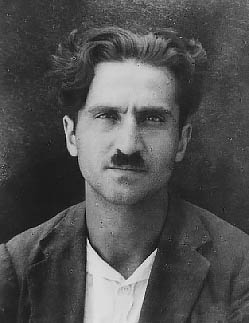
Najati Sidqi
نجاتي صدقي
Born: Jerusalem, Ottoman Palestine
Domain: Journalism & Media
Recognition: Regionally recognized
Member of the Palestinian diaspora
Biography
Muhammad Najati Sidqi (1905-1979) was a Palestinian journalist, literary critic, translator, and activist whose life traced an extraordinary arc across the political currents of the early twentieth century. Born in Jerusalem under late Ottoman rule, he became one of the first Arab members of the Palestine Communist Party and studied at the Communist University of the Toilers of the East in Moscow, an education that shaped his lifelong engagement with the press as a tool of mobilization and enlightenment. Sidqi spent much of his career as a working journalist and propagandist, editing and running clandestine Arabic-language newspapers in Paris and elsewhere in the diaspora. He worked in radio as well, joining the Near East Broadcasting Service after returning to Jerusalem in 1939, and he used both print and airwaves to argue against fascism and Nazism at a moment when many in the Arab world were tempted to see Hitler as an enemy of their British and Zionist adversaries. He was among the very few Arabs who travelled to Spain to support the Republican side against Franco during the Spanish Civil War, an episode that became emblematic of his internationalist, anti-fascist commitments. As a translator and critic he introduced Arabic readers to Pushkin, Chekhov, and Gorky, helping to widen the literary horizons of the interwar Arab intelligentsia and linking Palestinian cultural life to a broader world of letters. In his later years Sidqi broke with the Communist Party and turned increasingly to literary production, writing realist short stories and essays. He died in exile in Athens in 1979. His memoirs, edited by the poet Hanna Abu Hanna and published in Beirut in 2001, were later translated into English as Memoirs of a Palestinian Communist, securing his place as a singular witness to a vanished cosmopolitan moment in Palestinian and Arab intellectual history. Sidqi matters as a reminder that Palestinian journalism was, from its earliest decades, entangled with global ideological struggles and a transnational republic of letters, not merely a local or nationalist enterprise.
Why This Person Matters
He embodied the cosmopolitan, internationalist roots of Palestinian journalism, editing clandestine papers, broadcasting against fascism, and bridging Arabic letters with world literature. His translated memoirs preserve a rare firsthand account of an early Palestinian intellectual on the global stage.
Historical Context
Najati Sidqi was born in Jerusalem in 1905 under late Ottoman rule and came of age as Palestine passed into British Mandate hands, joining the small circle of Arab intellectuals drawn to revolutionary internationalism. He became one of the first Arab members of the Palestine Communist Party and studied at Moscow's Communist University of the Toilers of the East, an education that bound his understanding of the press to mobilization and enlightenment. In the 1930s he edited clandestine Arabic newspapers in Paris and joined the Republican side in the Spanish Civil War against Franco, an exceptional act for an Arab of his era. Returning to Jerusalem in 1939, he broadcast against fascism and Nazism at a moment when many in the Arab world saw Hitler as an enemy of their British and Zionist adversaries.
Historical Context
- — Born in Jerusalem, Ottoman Palestine
- — The Nakba – Palestinian catastrophe and mass displacement
- — Six-Day War and occupation of West Bank and Gaza
- — Passed away at age 74
Legacy & Influence
Sidqi endures as a reminder that Palestinian journalism was, from its earliest decades, entangled with global ideological struggles and a transnational republic of letters rather than a purely local enterprise. As a translator he introduced Arabic readers to Pushkin, Chekhov, and Gorky, widening the literary horizons of the interwar Arab intelligentsia and linking Palestinian culture to world literature. His memoirs, edited by the poet Hanna Abu Hanna and published in Beirut in 2001, were later translated into English as 'Memoirs of a Palestinian Communist,' securing his place as a singular witness to a vanished cosmopolitan moment. He is invoked today as proof of the early Palestinian intellectual's place on the global stage.
Topics & Themes
- Ottoman Era
- Diaspora
- Jerusalem
References & Sources
- Muhammad Najati Sidqi — https://en.wikipedia.org/wiki/Muhammad_Najati_Sidqi
- Najati Sidqi (1905-1979) — https://www.palestine-studies.org/en/node/1651919
- Memoirs of a Palestinian Communist — https://utpress.utexas.edu/9781477333228/