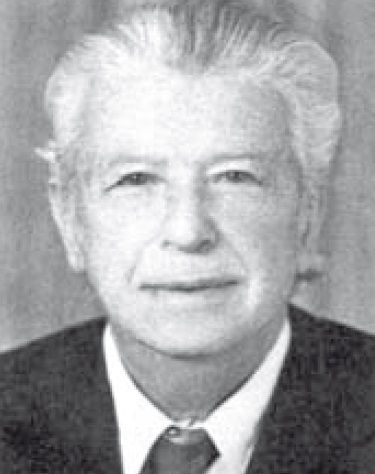
Ishaq Musa al-Husayni
إسحاق موسى الحسيني
Born: Jerusalem, Ottoman Palestine
Domain: Literature & Poetry
Recognition: Regionally recognized
Member of the Palestinian diaspora
Biography
Ishaq Musa al-Husayni was born in Jerusalem on 25 December 1904 into the prominent Husayni family, one of the leading notable households of late-Ottoman Palestine. He received his early schooling in Jerusalem before pursuing an unusually international academic path: a diploma in journalism from the American University in Cairo (1926), a degree in Arabic language and Semitic studies from the Egyptian University (1930), and a doctorate from the School of Oriental Studies at the University of London (1934) with a pioneering study of the classical author Ibn Qutayba. This training made him the first Palestinian to specialize professionally in modern literary scholarship. Returning to Mandatory Palestine, al-Husayni devoted himself to teaching and the reform of Arabic-language pedagogy. He taught Arabic at the Arab College in Jerusalem for some twelve years and served as senior inspector of Arabic for the Mandate education system (1946-1948), shaping a generation of students and earning the honorifics "teacher of the generation" (ustadh al-jil) and pioneer of literary studies in Palestine. Alongside teaching he produced a steady stream of scholarship and translation, ultimately authoring roughly twenty-three books spanning literary criticism, Arabic-language instruction, Orientalism, Islam, Arab nationalism, and the history of Jerusalem, including an early study of the Muslim Brotherhood. His enduring fame, however, rests on a slim allegorical novel: Mudhakkirat Dajaja (Memoirs of a Hen), published by Dar al-Maarif in Cairo in 1943. Narrated by a hen reflecting on coexistence, displacement, and tolerance in the coop, the fable is widely read as a gentle parable of Palestinian and human displacement. It won first place in Dar al-Maarif's reader poll for the best work in the celebrated "Iqra" series, was translated into French and later English, and remains a touchstone of modern Palestinian and Arabic literature. The 1948 Nakba uprooted al-Husayni along with his people. He left Jerusalem for Beirut, where he taught at the American University of Beirut until 1955, before settling in Cairo. His scholarly stature was recognized through election to the Arabic Language Academy in Cairo, the Iraqi Academy of Sciences (1961), and al-Azhar's Islamic Research Academy (1963), confirming his place among the leading Arab philologists of his generation. Ishaq Musa al-Husayni died on 17 December 1990 at the age of eighty-five. He is remembered both as a foundational figure of Palestinian literary scholarship and as the author of a single luminous fable whose meditation on exile and tolerance continues to resonate well beyond its modest length.
Why This Person Matters
He was the first Palestinian to specialize in modern literary scholarship and the author of Memoirs of a Hen, a beloved allegory of exile and tolerance.
Historical Context
Al-Husayni came of age across the rupture from late-Ottoman to British Mandate Palestine, born into the Husayni family whose members dominated Jerusalem's political and religious life. His career unfolded within the Mandate's Arabic education system at the very moment Palestinian Arab intellectual and national identity was crystallizing, and the 1948 Nakba turned him, like hundreds of thousands of compatriots, into a refugee whose remaining decades were spent in Beirut and Cairo.
Historical Context
- — Born in Jerusalem, Ottoman Palestine
- — The Nakba – Palestinian catastrophe and mass displacement
- — Six-Day War and occupation of West Bank and Gaza
- — Passed away at age 85
Selected Works
- Memoirs of a Hen — An allegorical 1943 novel narrated by a hen living in a Palestinian household — one of the earliest Arabic novels to use animal fable as political satire, and a founding text of modern Palestinian fiction.
Legacy & Influence
As the founding figure of Palestinian literary studies, al-Husayni shaped Arabic pedagogy and a generation of students, while his allegorical Memoirs of a Hen entered the canon of modern Arabic literature, was repeatedly translated, and is still taught and studied as an early literary meditation on Palestinian displacement and coexistence.
Topics & Themes
- Ottoman Era
- Diaspora
- Jerusalem
References & Sources
- Ishaq Musa al-Husseini, Writers and Novelists (1904-1990) — https://www.palquest.org/en/biography/14255/ishaq-musa-al-husseini
- Ishaq Musa al-Husayni (Arabic Wikipedia) — https://ar.wikipedia.org/wiki/إسحاق_موسى_الحسيني
- Ishaq Musa al-Husseini (1904-1990), Institute for Palestine Studies — https://www.palestine-studies.org/en/node/1650849