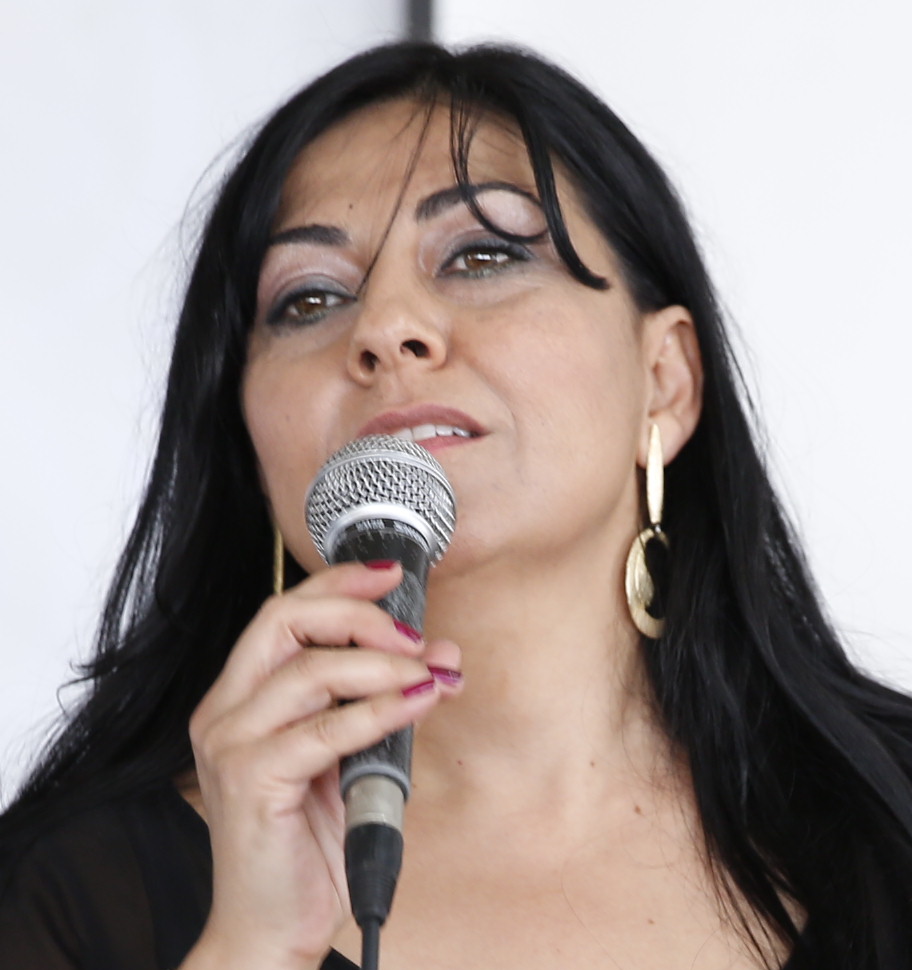
Amal Murkus
أمل مرقس
Born: Kafr Yasif, Israel
Domain: Music
Recognition: Regionally recognized
Biography
Amal Murkus, born in the Galilee village of Kafr Yasif in 1968, is among the most prominent Palestinian singers within Israel and a leading voice of contemporary Palestinian song. Raised in a politically committed family, she developed an independent artistic career from the 1990s onward, building a body of work that fuses classical Arabic vocal tradition, Palestinian folk heritage, and modern arrangements into a personal and politically conscious style. Murkus rose to prominence performing the poetry of major Arab and Palestinian writers, including Mahmoud Darwish, Samih al-Qasim, and Tawfiq Zayyad, lending her warm, expressive voice to verse of love, land, and resistance. Her albums and concerts have made her a familiar presence on stages across the Arab world and Europe, and she has become one of the most recognizable female interpreters of the Palestinian song tradition. As a Palestinian citizen of Israel, Murkus has used her platform to assert Palestinian cultural identity within a state that often marginalizes it, performing in Arabic and championing the language and heritage of her community. Her work in children's music and her long-running educational and television projects have made Palestinian song accessible to new generations, extending her influence beyond the concert hall. Beyond performance, she has been an outspoken cultural and political figure, aligning her art with the struggle for Palestinian rights and equality. Her concerts frequently double as affirmations of collective memory and identity, and she has collaborated with leading Arab and international musicians while remaining firmly rooted in her homeland. Across three decades, Amal Murkus has sustained a rare combination of artistic depth, popular reach, and political integrity, securing her place as one of the defining female voices of modern Palestinian music and a model for the singers who have followed her.
Why This Person Matters
One of the defining female voices of modern Palestinian song, she has carried the poetry of Darwish and his peers to global stages while asserting Palestinian cultural identity from within Israel.
Historical Context
Amal Murkus was born in 1968 in the Galilee village of Kafr Yasif, into the Palestinian community that remained inside Israel after 1948 and lived as a marginalized minority under a state that often suppressed its identity. Raised in a politically committed family, she absorbed the Galilee's tradition of resistance poetry and song, the world of Mahmoud Darwish, Samih al-Qasim, and Tawfiq Zayyad, whose verse she would later sing. Launching her independent career in the 1990s, she came of age amid the broken hopes of the Oslo years and the enduring struggle of Palestinian citizens of Israel for cultural and political recognition. Her insistence on performing in Arabic became itself an act of assertion within a state that marginalized her language and heritage.
Historical Context
- — Born in Kafr Yasif, Israel
Selected Works
- Hana — A signature album blending Arabic folk traditions, pop, and protest, showcasing the multi-octave voice that made Murkus one of the most recognized Palestinian singers working inside Israel.
Legacy & Influence
Murkus has become one of the defining female voices of modern Palestinian song, carrying the poetry of Darwish, al-Qasim, and Zayyad to stages across the Arab world and Europe with a warm, expressive voice. Her work in children's music and her long-running educational and television projects have transmitted Palestinian song to new generations, extending her reach beyond the concert hall. As an outspoken Palestinian citizen of Israel, she has used her platform to affirm collective memory and identity, making her concerts acts of cultural assertion. Across three decades she has combined artistic depth, popular reach, and political integrity, becoming a model for the younger Palestinian women singers who followed.
Topics & Themes
- Post-1967
References & Sources
- Amal Murkus — https://en.wikipedia.org/wiki/Amal_Murkus
- Amal Murkus — About — https://www.amalmurkus.org/about